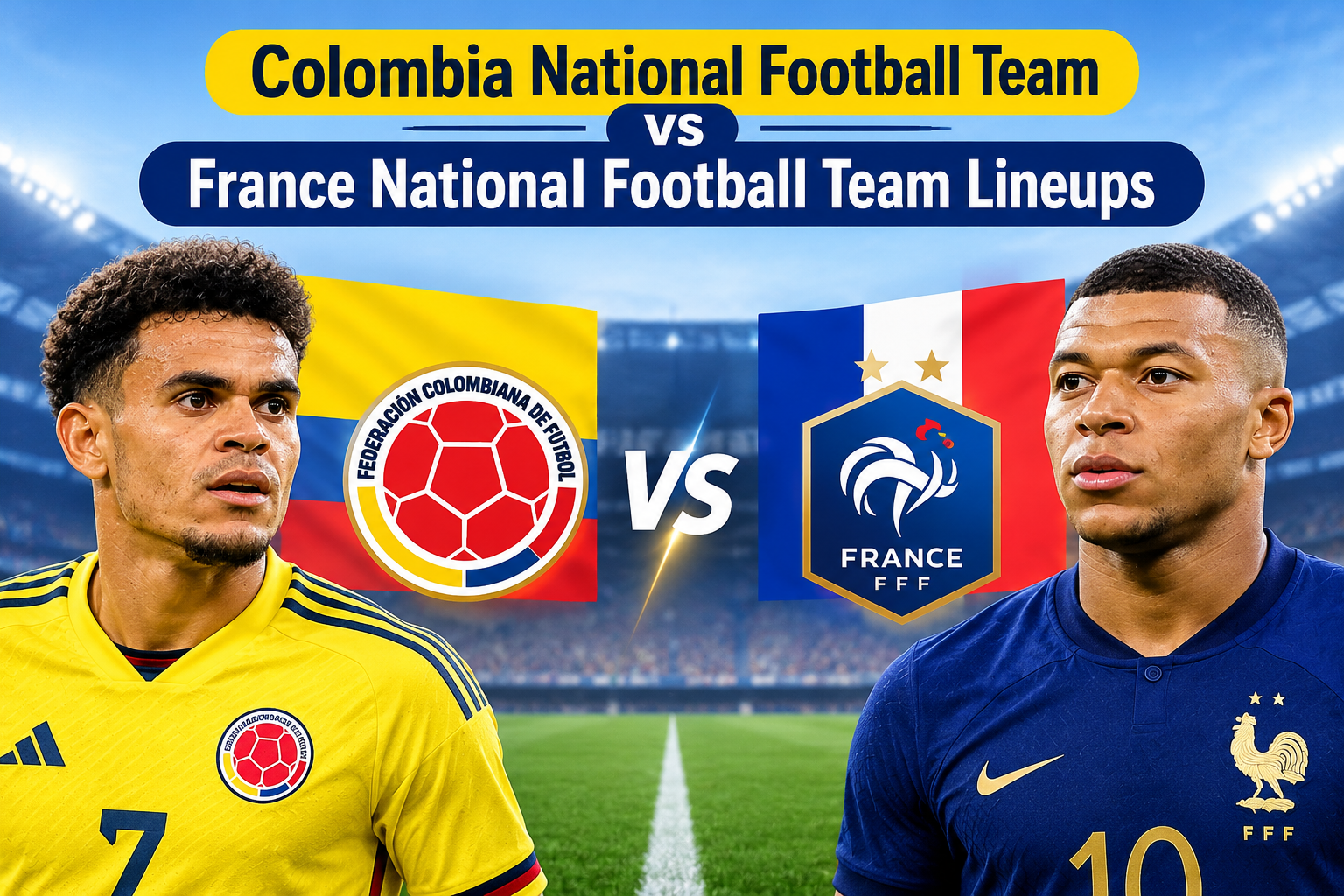
The Colombia National Football Team vs France National Football Team Lineups comparison is interesting because both countries have talented players in almost every position. Colombia can create problems through Luis Díaz, Jhon Arias, James Rodríguez, and its energetic midfield. France can respond with Kylian Mbappé, Michael Olise, Ousmane Dembélé, and a powerful defensive unit.
Both teams have the ability to compete against top international opponents. However, they approach games differently. Colombia often relies on energetic midfielders, creative wide players, and quick attacking transitions. France has a deeper pool of elite players, allowing the coaching staff to build several different tactical systems without losing quality.
This guide explores the likely starting formations, important players, defensive structures, midfield combinations, attacking options, and tactical differences between the two national teams. It also considers the depth of both squads and explains which team could have an advantage in different areas of the pitch.
The lineups discussed below are general projections based on the players and team structures available around November 2026. They are not official starting XIs for a scheduled match.
Helpful post: Utah Royals FC vs Boston Legacy FC Match Recap & Player Stats.
Colombia National Football Team Overview
The Colombia national football team, commonly called Los Cafeteros, has developed into one of South America’s most competitive international sides. The team combines technical ability with physical energy and attacking confidence.
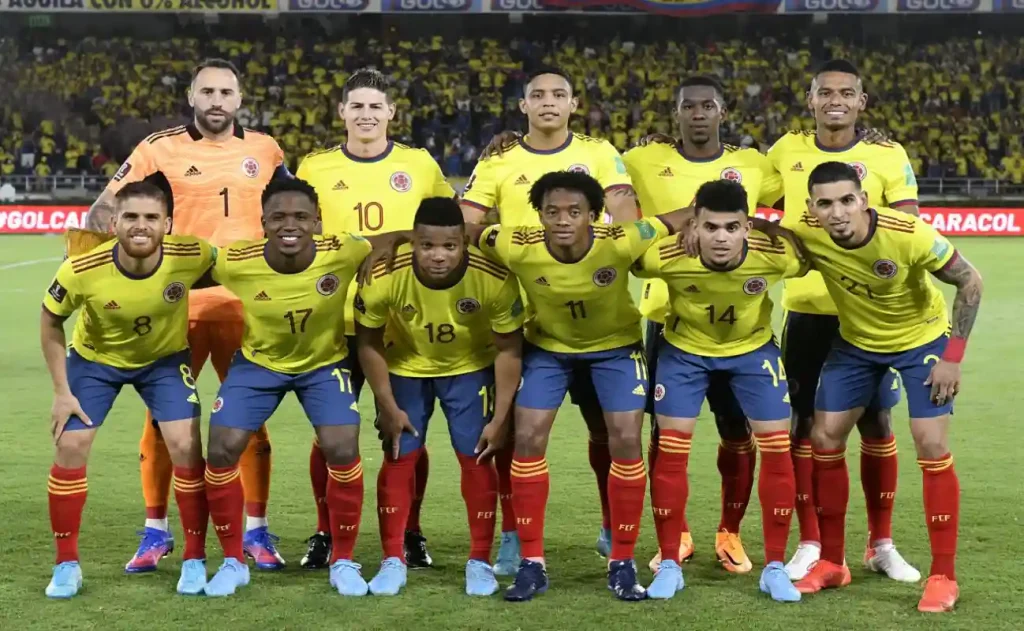
Under head coach Néstor Lorenzo, Colombia has built a recognizable playing identity. The team likes to move the ball quickly, use its wide players, and create opportunities through midfield combinations. Its players are comfortable carrying the ball forward and challenging defenders in one-on-one situations.
Colombia also has a strong competitive mentality. The team’s run to the 2024 Copa América final demonstrated its ability to challenge established international powers. Its 2026 World Cup campaign also showed its competitive potential, as Colombia topped its group and reached the round of 16.
Some of Colombia’s most recognizable players include:
- Luis Díaz: An explosive winger who creates chances through pace, dribbling, and direct attacking runs.
- James Rodríguez: An experienced creative midfielder known for passing accuracy, vision, and set-piece delivery.
- Jhon Arias: A versatile attacking midfielder and winger who offers movement, pressing, and creativity.
- Richard Ríos: A dynamic central midfielder who contributes through ball progression and physical energy.
- Jefferson Lerma: A defensive midfielder who provides protection and helps control the center of the pitch.
- Daniel Muñoz: An energetic fullback who supports attacks and contributes defensive intensity.
- Dávinson Sánchez: An experienced center-back who provides strength and aerial ability.
- Jhon Lucumí: A composed defender who helps Colombia build attacks from the back.
- Luis Suárez: A forward who offers movement, finishing ability, and attacking presence.
Colombia’s biggest advantage is its balance between creativity and physical intensity. The team can attack through the wings, progress through the middle, and apply pressure when opponents try to build from their defensive line.
France National Football Team Overview
The France national football team, known as Les Bleus, is one of the most successful teams in modern international football. Its history includes two FIFA World Cup titles, several major tournament finals, and a long tradition of producing elite players.
France offers an impressive combination of speed, strength, technical skill, and tactical flexibility. Its squad regularly includes players competing at the highest levels of European club football.
The French team entered a new coaching era in 2026 after Zinedine Zidane replaced Didier Deschamps. Zidane’s appointment introduced a more possession-focused approach, with greater emphasis on attacking combinations and controlling the ball.
France’s important players include:
- Kylian Mbappé: A world-class forward who offers exceptional speed, movement, and finishing.
- Michael Olise: A creative attacker who can play as a winger or attacking playmaker.
- Ousmane Dembélé: A technically gifted winger who creates opportunities through dribbling and unpredictability.
- Bradley Barcola: A quick attacker who can stretch defensive lines and attack open spaces.
- Désiré Doué: A young attacking talent with impressive technical ability and versatility.
- Rayan Cherki: A creative midfielder who can unlock defensive structures with intelligent passing.
- Eduardo Camavinga: A versatile midfielder who contributes to ball recovery and progression.
- Aurélien Tchouaméni: A defensive midfielder who offers physical strength and positional discipline when selected.
- William Saliba: A composed defender with excellent positioning and ball-playing ability.
- Mike Maignan: An experienced goalkeeper with strong reflexes and distribution.
France’s greatest strength is its squad depth. Even when several regular starters are unavailable, the team can introduce talented replacements without making a dramatic change to its overall playing style.
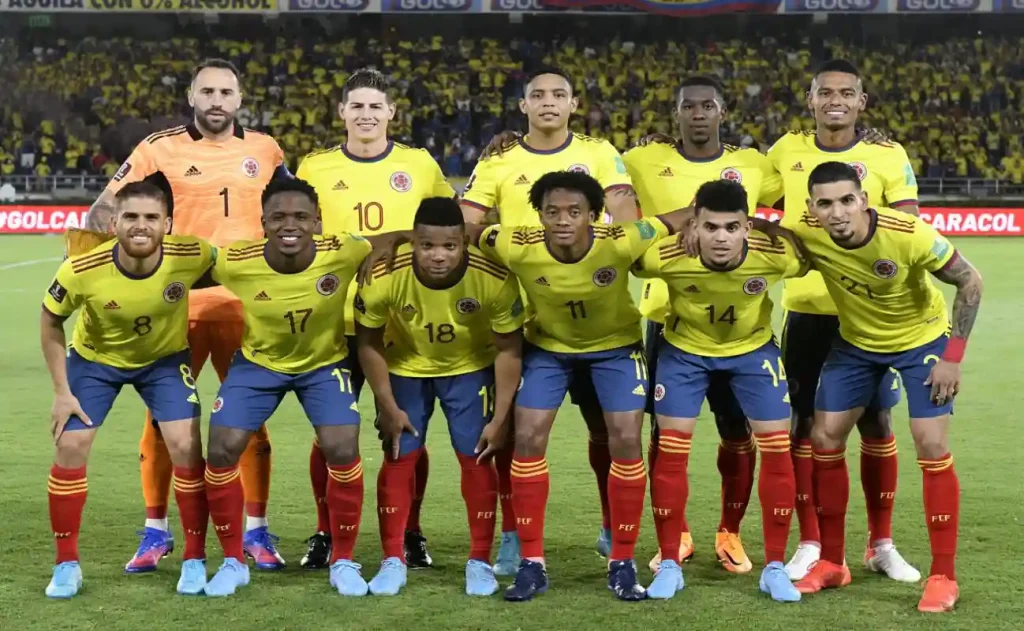
Expected Colombia Starting Lineup and Formation
Colombia can use different formations depending on the opponent, player availability, and match situation. A 4-2-3-1 system offers a useful starting point for understanding how its strongest attacking and defensive players could fit together.
Projected formation: 4-2-3-1
| Position | Projected player |
|---|---|
| Goalkeeper | Camilo Vargas |
| Right back | Daniel Muñoz |
| Center back | Dávinson Sánchez |
| Center back | Jhon Lucumí |
| Left back | Juan Cabal |
| Defensive midfield | Jefferson Lerma |
| Central midfield | Richard Ríos |
| Right attacking midfield | Jhon Arias |
| Attacking midfield | James Rodríguez |
| Left attacking midfield | Luis Díaz |
| Striker | Luis Suárez |
This is an illustrative combination rather than a confirmed selection. Players such as Gustavo Puerta, Jhon Solís, Nelson Deossa, Yáser Asprilla, and other emerging options could change the midfield and attacking positions.
Goalkeeper
Camilo Vargas is a strong option between the posts. He brings international experience, reliable shot-stopping, and confidence in important moments.
Defensive line
Daniel Muñoz provides energy on the right side. He can move forward to support Jhon Arias and create additional attacking options.
Dávinson Sánchez offers strength in central defense, while Jhon Lucumí brings composure and the ability to distribute the ball. Juan Cabal provides a potential left-sided option.
Midfield combination
Jefferson Lerma can protect the defense and interrupt opposition attacks. Richard Ríos adds mobility and helps move possession toward the attacking players.
James Rodríguez can operate in the advanced midfield position. His passing vision and ability to find space between defensive lines make him a useful creative option.
Attacking line
Luis Díaz is the main threat from the left. His pace and direct approach can force defenders to retreat.
Jhon Arias can create chances from the opposite side, while Luis Suárez provides a central attacking presence. This combination gives Colombia a mixture of movement, creativity, and finishing ability.
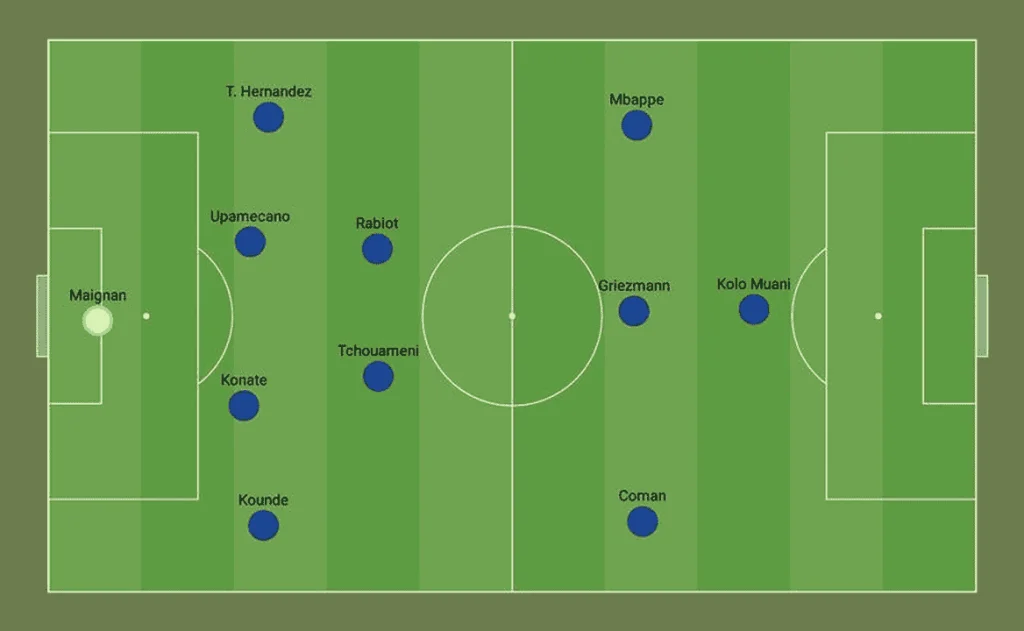
Expected France Starting Lineup and Formation
France’s current tactical direction under Zinedine Zidane makes the 4-3-3 formation a useful general model. It allows the team to control possession while keeping several dangerous attacking players close to the opposition penalty area.
Projected formation: 4-3-3
| Position | Projected player |
|---|---|
| Goalkeeper | Mike Maignan |
| Right back | Malo Gusto |
| Center back | William Saliba |
| Center back | Ibrahima Konaté |
| Left back | Adrien Truffert |
| Defensive midfield | Eduardo Camavinga |
| Central midfield | Aurélien Tchouaméni |
| Central midfield | Warren Zaïre-Emery |
| Right wing | Michael Olise |
| Center forward | Kylian Mbappé |
| Left wing | Bradley Barcola |
This projected XI reflects France’s available talent pool rather than its latest official matchday squad. Rayan Cherki, Désiré Doué, Ousmane Dembélé, Adrien Rabiot, Dayot Upamecano, and other players offer additional options.
Goalkeeper
Mike Maignan is an important part of France’s defensive structure. He combines quick reactions with good positioning and the ability to distribute the ball accurately.
Defensive line
Malo Gusto can provide width on the right side and support attacking combinations. William Saliba and Ibrahima Konaté offer a powerful central partnership.
Adrien Truffert is a possible left-back selection under Zidane. His ability to support the attack while maintaining defensive responsibilities makes him an interesting option.
Midfield combination
Camavinga offers versatility and excellent ball control. Tchouaméni can provide defensive protection and help the team maintain its structure.
Zaïre-Emery adds energy, movement, and the ability to carry the ball forward. France can also use Rabiot or Manu Koné depending on the tactical requirements.
Attacking line
Michael Olise offers creativity and intelligent movement from the right. Mbappé provides a major goal threat through the center or from the left.
Bradley Barcola can stretch the opposition defense with pace and direct runs. Doué and Dembélé provide additional attacking possibilities.
France’s strength is the number of combinations Zidane can create without losing attacking quality.
Colombia vs France Lineup Comparison
The most interesting part of this matchup is how the two teams compare across different positions.
| Position | Colombia | France | Potential advantage |
|---|---|---|---|
| Goalkeeper | Camilo Vargas | Mike Maignan | France |
| Right back | Daniel Muñoz | Malo Gusto | Close |
| Center back | Dávinson Sánchez | William Saliba | France |
| Center back | Jhon Lucumí | Ibrahima Konaté | France |
| Left back | Juan Cabal | Adrien Truffert | Close |
| Defensive midfield | Jefferson Lerma | Eduardo Camavinga | Different strengths |
| Central midfield | Richard Ríos | Aurélien Tchouaméni | Close |
| Attacking midfield | James Rodríguez | Warren Zaïre-Emery | Different roles |
| Right wing | Jhon Arias | Michael Olise | Different strengths |
| Center forward | Luis Suárez | Kylian Mbappé | France |
| Left wing | Luis Díaz | Bradley Barcola | Close |
The comparison is based on general player qualities and projected roles. It is not a statistical ranking or a prediction of a particular match result.
France has an advantage in several defensive and attacking positions because of its individual quality and depth. Colombia, however, has players capable of creating problems through speed, movement, and strong midfield combinations.
The midfield comparison is especially interesting. Lerma offers defensive aggression, while Camavinga provides greater versatility in possession. James Rodríguez brings creative passing, whereas Zaïre-Emery offers more movement and athleticism.
These differences mean the two teams would approach the same tactical situation in different ways.
Colombia and France Tactical Comparison
The tactical battle between these teams would likely revolve around possession, pressing, defensive organization, and attacking transitions.
Colombia generally looks comfortable playing with intensity and using its wide players to create opportunities. France, under Zidane, is developing a more possession-oriented approach that encourages players to move into attacking positions and maintain control of the ball.
Here are the main tactical differences.
1. Possession and Passing
France has the technical ability to control possession through its midfield. Players such as Camavinga, Cherki, Olise, and Zaïre-Emery can help the team maintain passing rhythm and move the ball into dangerous areas.
Colombia also has creative midfielders, but its approach can be more direct. James Rodríguez can dictate the tempo, while Ríos and Lerma provide energy and support.
France may have an advantage in sustained possession, but Colombia can be dangerous when it wins the ball and quickly moves forward.
2. Attacking Transitions
Colombia’s transition game is one of its biggest strengths. Luis Díaz can turn a defensive situation into an attacking opportunity within seconds.
Jhon Arias also provides excellent movement, allowing Colombia to attack through different channels. When James finds space, he can deliver accurate passes to runners moving behind the opposition defense.
France has equally dangerous transition options. Mbappé and Barcola can exploit defensive gaps, while Olise can create opportunities with intelligent passing.
Both teams have the speed to punish opponents who lose possession in midfield.
3. Defensive Organization
France has a strong collection of center-backs who can defend one-on-one situations and handle physical attackers.
Saliba, Konaté, Upamecano, and other defensive options give France considerable flexibility. The fullbacks can also support the attack while maintaining a compact defensive structure.
Colombia relies on the combination of Sánchez and Lucumí in central defense. Lerma can provide additional protection by closing spaces in front of the defensive line.
Colombia must remain organized because France has enough individual quality to exploit small defensive mistakes.
4. Wide Attacking Play
Wide areas could become one of the most important parts of this matchup.
Colombia has Luis Díaz, Jhon Arias, Daniel Muñoz, and other players capable of creating attacking overloads. The team can use overlapping fullbacks to give its wingers additional passing options.
France has Olise, Dembélé, Barcola, and Doué. These players can attack defenders directly, switch positions, and create chances through individual skill.
France may have more variety in its attacking options, but Colombia has enough pace to make the wide areas difficult to defend.
5. Set Pieces
Set pieces could also influence the outcome of a hypothetical meeting.
Colombia has players capable of delivering dangerous corners and free kicks. James Rodríguez and Juan Fernando Quintero are particularly useful creative options when selected.
France has strong aerial players, including its center-backs and physically powerful forwards. It can create danger through corners, free kicks, and second-ball situations.
Both teams have the personnel to turn a dead-ball opportunity into a scoring chance.
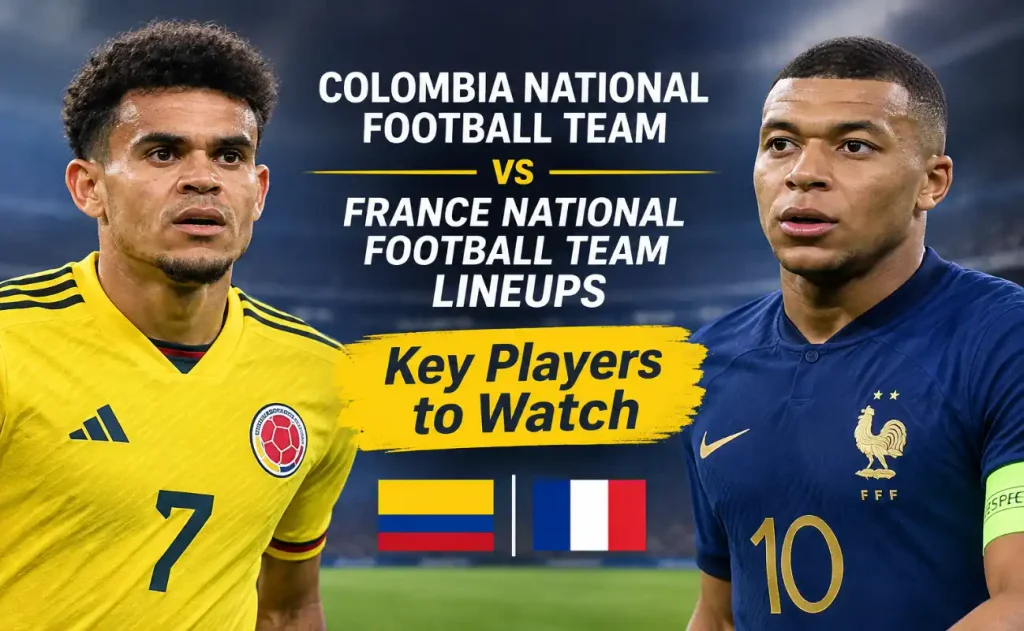
Key Players to Watch
Individual performances could make a major difference in a contest between Colombia and France. Both teams have players who can change the direction of a match with one decisive action.
Colombia’s Key Players
Luis Díaz
Luis Díaz is one of Colombia’s most dangerous attacking players. His pace, close control, and willingness to take on defenders make him a difficult opponent for any fullback.
He can create chances by cutting inside, attacking the byline, or making runs behind the defensive line. His ability to score goals also makes him more than just a traditional winger.
Against France, Díaz would be especially important because he could test the defensive positioning of Malo Gusto or another right-sided defender.
James Rodríguez
James brings experience and creativity to Colombia’s midfield. He can control the pace of an attack and find teammates with accurate passes.
His ability to deliver crosses, through balls, and set pieces makes him valuable against teams that defend with a compact structure.
However, his role would need to be balanced with defensive responsibilities. France’s energetic midfielders could target the spaces around him when Colombia loses possession.
Jhon Arias
Jhon Arias is an important attacking option because he can operate in multiple positions.
He offers energy, intelligent movement, and the ability to contribute defensively. His pressing can also help Colombia recover possession in advanced areas.
Arias could become particularly dangerous when he combines with Daniel Muñoz on the right side.
Richard Ríos
Ríos is an important part of Colombia’s midfield because he can carry the ball forward and compete physically.
He can help the team move from defense into attack while providing support to the more creative players.
His performance would be important against France’s technically strong midfield.
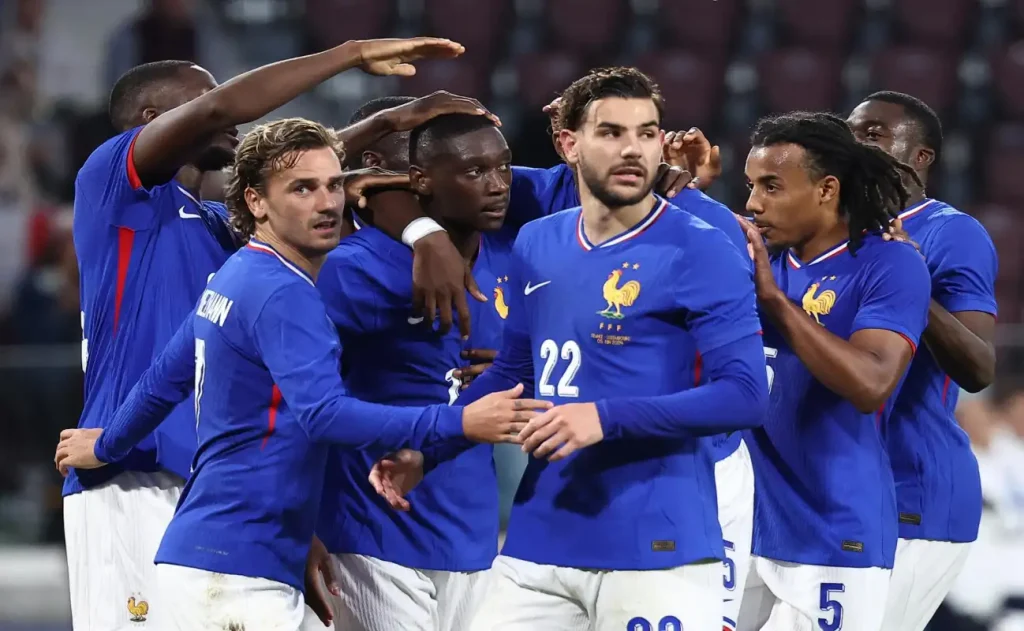
France’s Key Players
Kylian Mbappé
Mbappé is arguably France’s biggest attacking threat. His acceleration, finishing, and ability to attack space make him dangerous from almost any forward position.
He can operate as a central striker or move toward the left side to create one-on-one situations.
Colombia’s defenders would need to maintain close communication and avoid leaving space behind their defensive line.
Michael Olise
Olise is one of France’s most creative attacking players. He can deliver accurate passes, create chances, and score from outside the penalty area.
His movement between the right wing and central attacking areas can make defensive marking difficult.
He could also create opportunities for Mbappé by attracting defenders and opening spaces for forward runs.
Ousmane Dembélé
Dembélé provides another attacking dimension. His ability to use both feet makes him difficult to predict.
He can attack from either side, create chances through dribbling, and change direction quickly.
His role may depend on Zidane’s preferred combination of attackers, but he remains an important option in France’s wider squad.
Eduardo Camavinga
Camavinga can influence the game in several positions. He is comfortable receiving the ball under pressure, carrying it forward, and helping recover possession.
His versatility gives France more tactical flexibility.
Against Colombia, his ability to control midfield spaces could be particularly valuable.
Squad Depth and Substitute Options
Squad depth is an important part of any international team comparison. Starting players receive most of the attention, but substitutes can completely change the rhythm of a game.
Colombia has a number of useful alternatives. Gustavo Puerta, Nelson Deossa, Yáser Asprilla, Jaminton Campaz, and Juan Fernando Quintero offer different midfield and attacking qualities.
Juan Cabal, Jhon Lucumí, and other defensive options can also help the coaching staff adjust the back line.
France has an especially deep collection of attacking and midfield alternatives. Rayan Cherki, Désiré Doué, Bradley Barcola, Ousmane Dembélé, and Warren Zaïre-Emery can provide different qualities depending on the situation.
The French defense also has several options, including Dayot Upamecano, Ibrahima Konaté, and Leny Yoro.
The latest November 2026 selections show how both teams are continuing to develop their player pools. Colombia has introduced several younger names, while France has continued rotating players under Zidane. Federación Colombiana de Futbol+2
| Squad area | Colombia | France |
|---|---|---|
| Goalkeeping options | Experienced international choices | Strong technical and shot-stopping options |
| Defensive depth | Developing alternatives | Greater established depth |
| Midfield depth | Creative and energetic options | Excellent technical and physical variety |
| Attacking depth | Díaz, Arias, Suárez and alternatives | Mbappé, Olise, Dembélé, Doué and others |
| Young talent | Continuing generational transition | Several highly rated emerging players |
France appears to have the advantage in overall squad depth. Colombia, however, has enough quality to remain competitive, especially when its strongest attacking players are available.
What Could Be Colombia’s Biggest Advantage?
Colombia’s biggest advantage could be its ability to attack quickly and disrupt France’s rhythm.
France may prefer to control possession, but Colombia can use aggressive pressing to force mistakes. Players such as Lerma, Ríos, Arias, and Díaz can help the team recover the ball and launch quick attacks.
Colombia can also use its wide players to stretch the French defensive structure. If Díaz receives the ball in space, he can create problems through direct dribbling and quick changes of direction.
Another important advantage is the team’s attacking chemistry. Several Colombian players have developed an understanding through repeated international appearances.
However, Colombia must avoid giving France too much space. If the French midfielders receive the ball comfortably, they can control the tempo and create opportunities for their forwards.
The best approach for Colombia would be to remain compact, press intelligently, and use possession efficiently rather than constantly chasing the ball.
What Could Be France’s Biggest Advantage?
France’s biggest advantage is its combination of individual quality, physical strength, and tactical flexibility.
The French team has several players who can create scoring opportunities without needing much space. Mbappé can attack behind defenders, Olise can deliver creative passes, and Dembélé can beat opponents through dribbling.
France also has a strong defensive foundation. Its center-backs can handle physical challenges and defend against fast attackers.
Another advantage is its ability to change attacking combinations during a game. Zidane can introduce different wingers, midfielders, and forwards depending on the situation.
However, France must avoid becoming too predictable. Colombia has enough pressing intensity to make possession difficult when the French midfield loses its shape.
France would benefit from maintaining good spacing between its midfield and attacking lines while using its technical quality to control the game.
Important Factors That Could Decide the Match
Several factors could determine how a hypothetical meeting between Colombia and France develops.
1. Midfield Control
The midfield battle would be one of the most important areas. Colombia needs Lerma and Ríos to prevent France from controlling possession.
France, meanwhile, would want its midfielders to create passing options and move the ball into attacking areas.
If Colombia wins the midfield battle, it can create more opportunities through quick transitions. If France controls the center, it could force Colombia to spend more time defending.
2. Individual Attacking Quality
Both teams have players capable of producing moments of brilliance.
Colombia can rely on Díaz and Arias to create chances through movement and dribbling. France has Mbappé, Olise, and Dembélé, who can threaten the opposition through speed and technical ability.
The team that uses its attacking opportunities more efficiently could gain a significant advantage.
3. Defensive Discipline
Colombia must avoid leaving too much space behind its fullbacks. France has fast attackers who can exploit defensive gaps.
France also needs to remain careful when facing Colombia’s counterattacks. Díaz and Arias can quickly move into dangerous positions when possession changes.
4. Fitness and Player Availability
International football often involves players arriving from demanding club schedules. Fatigue, injuries, and limited preparation time can influence team selection.
The availability of Mbappé, Díaz, James Rodríguez, and other important players could significantly change the projected starting formations.
Coaches must also consider how much playing time their key players have received before selecting the final lineup.
Colombia vs France Head to Head and Football History
Colombia and France have faced each other in international football, including friendly matches. Their meetings provide useful context for understanding the different playing styles of these national teams.
France has traditionally enjoyed a stronger record in major international tournaments. The country has won the FIFA World Cup twice, in 1998 and 2018.
Colombia has also established itself as a respected international side. Its best World Cup performance came in 2014, when the team reached the quarterfinals. Colombia also reached the Copa América final in 2024.
However, historical achievements should not determine the outcome of a hypothetical future meeting. International squads change, new players emerge, and coaching strategies evolve.
The current generation of Colombian players has enough quality to challenge major European teams. France also has the resources and experience to compete at the highest level.
For an accurate historical comparison, readers should distinguish between friendly matches, competitive tournament games, and overall national team achievements.
Which Team Has the Stronger Starting Lineup?
France appears to have the stronger lineup on paper when comparing overall individual quality and positional depth.
Its defensive options, attacking variety, and midfield versatility give it an advantage in several areas. Players such as Saliba, Camavinga, Olise, and Mbappé bring qualities that can make a difference against almost any international opponent.
Colombia, however, should not be underestimated. Its strongest players have the ability to compete with elite opponents, particularly through quick attacks and aggressive midfield play.
The Colombian combination of Díaz, Arias, Ríos, and Lerma offers a good balance of speed, creativity, and physical energy.
A hypothetical match could become particularly competitive if Colombia maintains defensive discipline and uses its attacking transitions effectively.
Overall assessment: France has the advantage in individual squad depth, while Colombia has the potential to make the contest difficult through attacking intensity, teamwork, and tactical organization.
Frequently Asked Questions
1. What formation does Colombia usually use?
Colombia can use a 4-2-3-1 or 4-3-3 formation depending on its available players and the opposition. These systems allow the team to use its creative midfielders and attacking wingers effectively.
2. What formation does France use under Zinedine Zidane?
Zinedine Zidane has used a 4-3-3 formation during his early matches as France coach. The system emphasizes possession, attacking movement, and technical combinations.
3. Who are the most important players for Colombia?
Luis Díaz, James Rodríguez, Jhon Arias, Richard Ríos, Jefferson Lerma, and Daniel Muñoz are among Colombia’s important players. Their contributions cover attacking creativity, midfield control, and defensive organization.
4. Who are the most important players for France?
Kylian Mbappé, Michael Olise, Ousmane Dembélé, Eduardo Camavinga, William Saliba, and Rayan Cherki are among France’s notable players.
5. Who is the goalkeeper for Colombia?
Camilo Vargas is one of Colombia’s leading goalkeeper options. Álvaro Montero and David Ospina are other experienced alternatives, although selections can change between international camps.
6. Who is the goalkeeper for France?
Mike Maignan is France’s leading goalkeeper option. Guillaume Restes and Robin Risser also provide alternatives.
7. Who has the better attacking lineup between Colombia and France?
France has greater overall attacking depth, with players such as Mbappé, Olise, Dembélé, Barcola, and Doué. Colombia also has dangerous attacking options, particularly Luis Díaz and Jhon Arias.
8. Can Colombia compete with France?
Yes. Colombia has the attacking quality, midfield energy, and defensive organization to challenge France. Its chances would depend on player availability, tactical preparation, and the team’s ability to limit French attacking opportunities.
9. Who has the stronger midfield?
France has more variety in its midfield options, combining technical players with physically strong ball winners. Colombia has a competitive midfield built around players such as Lerma, Ríos, James Rodríguez, and Jhon Arias.
10. Are the projected lineups official?
No. The projected lineups in this article are general tactical combinations based on the players available around November 2026. Official starting XIs are announced by the teams before an actual match.
See also: Seahawks vs Steelers. Matchup Preview and Team Analysis.
Conclusion
The Colombia National Football Team vs France National Football Team Lineups comparison highlights two talented teams with different strengths and tactical identities.
Colombia relies on creativity, attacking movement, energetic midfielders, and quick transitions. Its players can create dangerous situations through individual skill and coordinated attacking combinations.
France offers greater overall squad depth, physical strength, and attacking variety. Its talented midfielders and forwards provide several ways to control games and create scoring opportunities.
France has the stronger lineup on paper, but Colombia has enough quality to make a hypothetical meeting highly competitive.
Ultimately, the tactical approach, player availability, defensive discipline, and individual performances would determine how these teams match up. Both national teams have the talent to produce an exciting contest.