You’ve probably heard someone say this during a joke, an argument, or a dare. Sometimes it lands as playful teasing. Other times, it feels like someone is deliberately pushing a sensitive button.
That difference matters.
The phrase is usually connected with courage, confidence, bravery, or a willingness to do something risky. It can appear in casual conversations among friends, especially when one person wants to pressure another person into taking action.
The tricky part is that the words sound much more literal than the intended meaning. Someone hearing them for the first time may wonder if the speaker is talking about anatomy, confidence, masculinity, or simply joking around.
This guide explains the phrase in plain American English, including what it means, how people use it, when it becomes insulting, and how to respond without losing your confidence.
Helpful post: Baseball Puns That Make You Smile And Stay All Day
What No Balls Usually Means
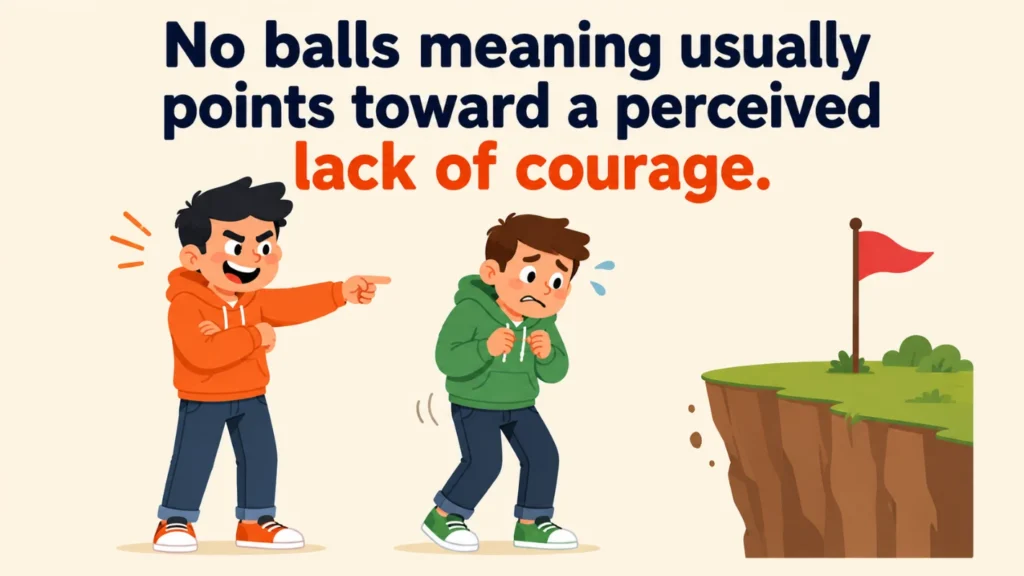
People generally use the phrase to suggest that someone lacks courage or refuses to do something bold. It can also function as a dare, especially when one person wants another person to prove they are willing to take a risk.
The phrase can feel playful between close friends, yet the same words can sound harsh when used by a stranger or during conflict.
- No balls meaning usually points toward a perceived lack of courage.
- People often use it when someone refuses a dare or bold request.
- The phrase can challenge someone to prove they are confident.
- Friends may say it jokingly during playful conversations.
- Strangers may hear it as a direct insult.
- The phrase can pressure someone into doing something uncomfortable.
- It often questions a person’s willingness to take a risk.
- Some speakers use it when someone backs away from confrontation.
- The expression can suggest weakness in a deliberately provocative way.
- It may appear after someone changes their mind about a challenge.
- Online users sometimes use it as shorthand for you will not.
- The phrase can sound immature when used simply to embarrass someone.
- Context strongly affects how offensive the expression feels.
- A close friendship can make the phrase sound more playful.
- A serious disagreement can make the same words feel deliberately cruel.
- Understanding the situation matters more than reading the phrase literally.
Pro Insight: The important meaning is usually courage, not anatomy. Treat the surrounding conversation as the real clue.
Why People Use It As A Dare
A common use appears when someone wants another person to accept a challenge. The expression works like verbal pressure, suggesting that refusing will make the person look weak.
- A person may say it right after presenting an uncomfortable challenge.
- The goal is often to provoke a reaction.
- Friends may use it to create playful competition.
- Someone might use it before a risky stunt.
- A person could hear it after refusing an embarrassing request.
- It can turn an ordinary decision into a test of confidence.
- The phrase sometimes encourages reckless behavior.
- A confident response can stop the pressure immediately.
- Saying no does not prove that someone lacks courage.
- Smart people recognize that unnecessary danger is not bravery.
- Peer pressure often hides behind supposedly funny challenges.
- The phrase can make people feel watched or judged.
- Some groups use it repeatedly as part of their humor.
- Others use it only when they genuinely want a reaction.
- The emotional effect depends strongly on the relationship.
- A reasonable boundary can be more courageous than accepting a dare.
Pro Insight: Never confuse social pressure with courage. Walking away from a dangerous challenge can show more judgment than accepting it.
How The Phrase Can Question Courage
At its heart, the expression challenges someone’s bravery. It says the speaker believes the other person is unwilling to act when action feels difficult, risky, or uncomfortable.
- Courage often involves acting despite fear.
- This phrase turns that complex idea into a crude insult.
- The speaker may believe fear automatically means weakness.
- Real confidence does not require constant risk taking.
- Saying no can sometimes reflect maturity rather than cowardice.
- Someone may refuse because the consequences genuinely matter.
- The phrase ignores personal boundaries and individual circumstances.
- It can unfairly reduce a person to one hesitant decision.
- A single refusal cannot measure someone’s character.
- Strong people can admit when something feels unsafe.
- Emotional courage often involves difficult conversations instead.
- Physical risk is only one kind of challenge.
- Confidence can exist quietly without dramatic behavior.
- Someone can be nervous and still act bravely.
- Someone can also act recklessly while pretending to be fearless.
- No balls meaning therefore depends heavily on the speaker’s intention.
Pro Insight: Courage is better measured by judgment, honesty, and responsibility than by reckless behavior.
Is It Always An Insult
Not necessarily. Close friends sometimes use crude expressions as playful teasing, especially when both people understand the joke and nobody feels targeted or humiliated.
- Friendly teasing can make the phrase sound harmless.
- Tone often changes how the words are received.
- A laughing friend may intend playful pressure.
- A stranger using the same words may sound aggressive.
- Arguments can make the expression much more hostile.
- Someone who feels embarrassed may not enjoy the joke.
- Repeated teasing can become uncomfortable over time.
- A joke stops being funny when someone clearly wants it to stop.
- Respect should remain part of friendly conversation.
- The speaker’s intention does not erase the listener’s reaction.
- Context helps explain the phrase but does not excuse cruelty.
- People have different boundaries around vulgar language.
- A respectful friend should notice discomfort.
- Some people simply dislike sexually based insults.
- Good humor creates connection instead of humiliation.
- The safest approach is to consider the relationship before using it.
Pro Insight: If the other person looks uncomfortable, stop treating the phrase as harmless teasing.
No Balls Meaning In Text Messages
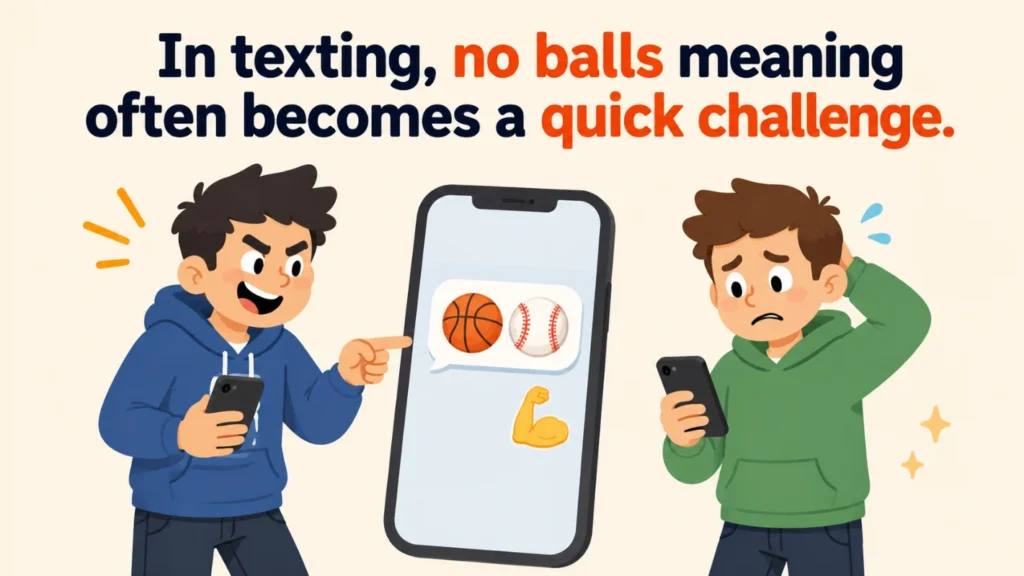
Text conversations make this expression especially interesting because written words remove facial expressions and vocal tone. A message that sounds funny aloud can appear much harsher on screen.
- In texting, no balls meaning often becomes a quick challenge.
- Someone may send it after a friend describes a risky plan.
- The phrase can mean you will not do it.
- It may appear after someone backs away from a dare.
- Texting can make the phrase feel more direct.
- Emojis may soften the tone in casual conversations.
- A serious response can stop the exchange without escalating it.
- Friends sometimes use repeated slang as part of their shared humor.
- Strangers should be more cautious with vulgar expressions.
- Digital communication removes important emotional cues.
- A short phrase can sound colder than intended.
- People may interpret slang differently because of age or culture.
- American slang often spreads quickly through online communities.
- Context from earlier messages can reveal the intended tone.
- A simple clarification can prevent unnecessary conflict.
- Meaning comes from the entire conversation rather than four words alone.
Pro Insight: Read the surrounding messages before assuming a text is hostile or playful.
When The Phrase Becomes Mean
There is a clear difference between teasing and deliberately shaming someone. The phrase becomes harmful when its purpose shifts from playful joking toward humiliation, intimidation, or pressure.
- Repeated insults can slowly damage trust between friends.
- Public teasing can make embarrassment much stronger.
- Calling someone weak during an argument can escalate conflict.
- The expression can become personal when aimed at insecurity.
- Pressure becomes unhealthy when refusing no longer feels acceptable.
- A person may comply simply to avoid humiliation.
- That does not make the challenge reasonable.
- Personal boundaries deserve respect even during joking conversations.
- Nobody should need to prove courage for social approval.
- Strong friendships can survive a simple refusal.
- A good friend should accept a clear boundary.
- Mockery can sometimes hide deeper insecurity in the speaker.
- Insults rarely create genuine confidence.
- Emotional safety matters alongside physical safety.
- Public humiliation can stay with someone longer than expected.
- The phrase should never become an excuse for bullying.
Pro Insight: Watch the behavior around the phrase. Pressure, humiliation, and repeated targeting matter more than the words themselves.
How To Respond Without Losing Confidence
You do not have to accept the challenge just because someone questions your courage. A calm response often shows more confidence than an angry comeback.
- You can simply say that you are not interested.
- A relaxed no can end the conversation quickly.
- You can laugh if the situation genuinely feels harmless.
- You can explain that the risk is not worth it.
- Confidence does not require proving yourself to everyone.
- A direct boundary can sound calm and mature.
- You can change the subject when teasing becomes repetitive.
- A friend may respect you more for being honest.
- You do not owe anyone an explanation for every decision.
- Walking away can prevent an argument from getting worse.
- Humor can sometimes diffuse unnecessary tension.
- A confident person can admit feeling nervous.
- You can challenge the idea instead of the person.
- Saying I am good with my decision can sound powerful.
- You can refuse without insulting the other person.
- Your self respect should not depend on accepting a dare.
Pro Insight: The strongest response often sounds simple because genuine confidence does not need a performance.
Common Situations Where You Hear It
The expression tends to appear in predictable social situations where someone is questioning another person’s willingness to act.
- Friends may use it during playful dares.
- Someone might say it before asking for a bold action.
- It can appear during competitive games.
- People sometimes use it after someone backs away.
- Party conversations can involve the phrase as teasing.
- Dating conversations may include it during playful challenges.
- Group chats sometimes turn the expression into a recurring joke.
- Sports conversations can include similar language about toughness.
- Online communities may use it to provoke reactions.
- Arguments can turn it into a personal insult.
- Someone may use it when another person refuses confrontation.
- Coworkers should generally avoid this kind of vulgar teasing.
- Family conversations may have very different boundaries.
- Close friends usually understand each other’s humor better.
- New relationships require more awareness around slang.
- The same phrase can feel completely different across settings.
Pro Insight: Social context is essential. A phrase acceptable among close friends can be inappropriate in a workplace or unfamiliar group.
The Difference Between No Balls And Coward
The two ideas overlap, but they are not identical. Coward is a direct judgment about someone’s behavior, while the slang phrase adds vulgarity and a challenge to perceived masculinity.
- Coward is a conventional insult about courage.
- No balls meaning carries a more vulgar tone.
- Both expressions can criticize hesitation.
- The slang phrase often appears during dares.
- Coward can describe behavior across many situations.
- No balls is usually more casual and provocative.
- The slang can sound more masculine coded.
- Coward may appear in serious discussions.
- No balls usually belongs to informal speech.
- Both terms can oversimplify complicated emotions.
- Fear does not automatically equal cowardice.
- Hesitation can come from thoughtful risk assessment.
- People sometimes need time before making difficult choices.
- Strong language can distract from the real issue.
- Better communication focuses on the specific behavior involved.
- Calling someone cautious may be more accurate in many cases.
Pro Insight: Precise language is often more useful than insults. Describe the behavior instead of attacking the person.
What The Phrase Says About Masculinity
The expression carries a cultural idea that courage should be connected with male anatomy. That connection is crude and reflects older ideas about masculinity, toughness, and dominance.
- The phrase traditionally targets ideas about male courage.
- It can suggest that masculinity requires fearlessness.
- That stereotype can create unnecessary pressure.
- Men can experience fear without losing dignity.
- Emotional honesty can coexist with confidence.
- Saying no does not make someone less masculine.
- Courage is not biologically guaranteed by anatomy.
- The phrase uses crude imagery to make a social judgment.
- Language can preserve old assumptions long after attitudes change.
- Modern conversations often separate confidence from physical toughness.
- People can be brave through patience and compassion.
- Asking for help can require genuine courage.
- Setting boundaries can also be courageous.
- Healthy masculinity does not depend on reckless behavior.
- Respectful friendships allow people to admit vulnerability.
- Understanding this context makes the slang easier to interpret.
Pro Insight: The phrase reflects a cultural stereotype, not a reliable measurement of courage or personal worth.
No Balls Meaning In Dating Conversations
Dating can make this slang especially sensitive because confidence and vulnerability already carry emotional weight. A playful challenge can feel exciting, but pressure can quickly become uncomfortable.
- Someone may use it when a person hesitates to approach a crush.
- Friends may tease someone about sending a romantic message.
- A date may hear it during playful competition.
- Romantic teasing depends heavily on trust.
- Consent and comfort should remain more important than winning a dare.
- Nobody should be pressured into sexual behavior.
- Confidence can mean communicating honestly instead.
- A nervous first move does not prove weakness.
- Attraction often involves genuine vulnerability.
- A respectful partner should accept a clear boundary.
- Teasing can be charming when both people enjoy it.
- Teasing becomes uncomfortable when someone feels cornered.
- Humor should never replace clear communication.
- Dating confidence grows through experience and self awareness.
- A person does not need crude approval to feel attractive.
- Emotional maturity can be far more appealing than bravado.
Pro Insight: In dating, confidence works best when it leaves room for both people to feel safe and respected.
Better Words For Talking About Courage
Sometimes the easiest way to avoid unnecessary conflict is to replace crude language with words that describe the actual behavior.
- Brave describes someone who acts despite understandable fear.
- Confident describes someone comfortable with their decision.
- Bold describes willingness to take a meaningful risk.
- Fearless sounds dramatic and can sometimes exaggerate reality.
- Determined describes someone who keeps pursuing a goal.
- Cautious describes careful decision making.
- Hesitant describes uncertainty without attacking character.
- Nervous describes an emotional state without judgment.
- Reserved can describe someone who avoids impulsive action.
- Assertive describes clear communication and personal boundaries.
- Courageous often captures the deeper idea more accurately.
- Self assured describes confidence without needing dominance.
- Adventurous describes willingness to explore unfamiliar experiences.
- Thoughtful describes someone who considers consequences.
- Responsible describes someone who takes risks seriously.
- These alternatives can communicate the real idea without unnecessary insult.
Pro Insight: Better vocabulary does more than sound polite. It helps you describe people more accurately.
Why Some People Take The Phrase Personally
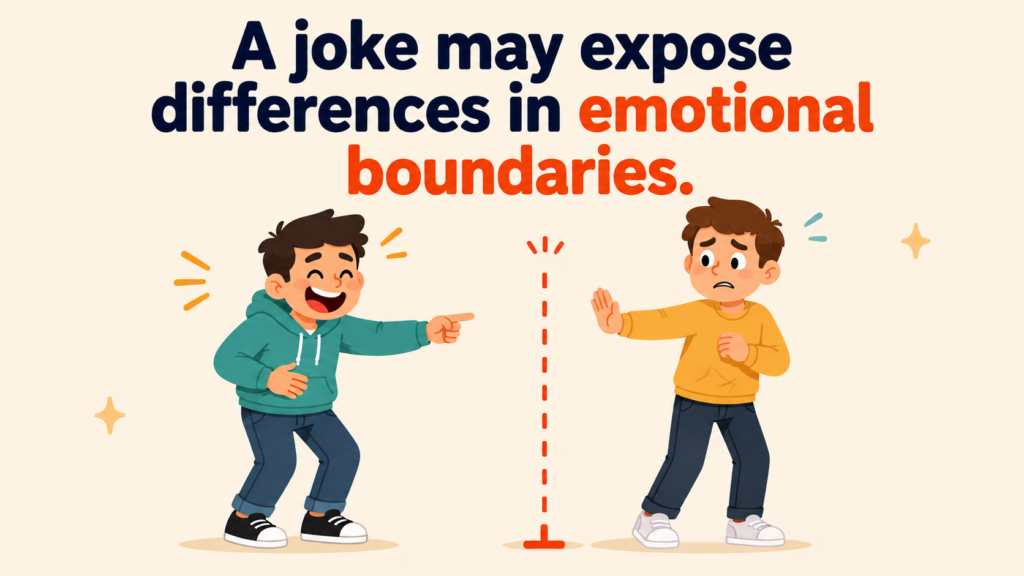
Words connected with courage, masculinity, and confidence can touch sensitive areas of identity. Someone may laugh outwardly while still feeling embarrassed inside.
- Personal insecurities can make teasing feel much heavier.
- Public jokes can create stronger emotional reactions.
- Past bullying can make similar language especially painful.
- Someone may already question their confidence.
- Being called weak can reinforce existing self doubt.
- Close relationships can make criticism feel more significant.
- A joke may expose differences in emotional boundaries.
- People do not always reveal when words hurt.
- Silence does not automatically mean the person enjoyed the joke.
- A respectful conversation can repair awkward moments.
- Apologizing does not make someone weak.
- Emotional awareness can prevent unnecessary conflict.
- Friends should be able to discuss uncomfortable jokes.
- Confidence does not require pretending that insults never hurt.
- Self respect grows when you understand your own boundaries.
- Language carries emotional weight even when speakers call it humor.
Pro Insight: Pay attention to the person, not just the joke. Emotional context often tells you more than the phrase itself.
How Culture Changes The Meaning
Slang does not behave like a fixed dictionary entry. Its tone can shift depending on region, age group, online community, relationship, and social setting.
- American speakers commonly understand the phrase as crude courage slang.
- Younger groups may encounter it through memes and online conversations.
- Older speakers may hear it primarily as a vulgar insult.
- Friends can develop private meanings around familiar expressions.
- Different communities may use the phrase with different intensity.
- Online slang often spreads beyond its original social group.
- Translation can change the emotional force of an expression.
- Literal translations may miss the cultural meaning.
- Context remains essential when interpreting unfamiliar slang.
- A phrase can sound playful in one community and hostile elsewhere.
- Workplace communication usually requires more restraint.
- Dating conversations require additional awareness of personal boundaries.
- Gaming communities may use dare language casually.
- Social media can amplify expressions without explaining their background.
- Listening to surrounding language helps identify the intended tone.
- Cultural awareness prevents many unnecessary misunderstandings.
Pro Insight: Never interpret slang from the words alone. Culture and relationship often determine the emotional meaning.
How To Use The Phrase Responsibly
Understanding the phrase does not mean you need to use it. Knowing when a slang expression can hurt someone is part of understanding slang well.
- Use caution around people you do not know well.
- Avoid using it to pressure someone into danger.
- Do not use it to shame someone publicly.
- Respect someone who clearly rejects the joke.
- Keep vulgar teasing among people who genuinely understand it.
- Think about power differences before making a joke.
- Avoid using it professionally.
- Do not connect courage with someone’s physical anatomy.
- Give people space to make their own decisions.
- Humor should create enjoyment rather than fear.
- A playful challenge should remain easy to decline.
- Respect matters more than getting the last laugh.
- If someone looks uncomfortable, change direction.
- You can apologize without making the moment dramatic.
- Strong friendships allow honest boundaries.
- Responsible slang use starts with understanding its effect.
Pro Insight: The best rule is simple. Never use the phrase as an excuse to override another person’s boundaries.
Related Slang And Similar Expressions
People searching for no balls meaning often encounter other slang phrases built around courage, confidence, daring, and confrontation. Understanding those expressions gives the phrase clearer context.
- Guts can describe courage without the same vulgar tone.
- Got the nerve can question someone’s willingness to act.
- Have some courage is much more direct.
- Step up can challenge someone to take responsibility.
- Man up carries its own gendered assumptions.
- Grow a spine suggests someone should become more assertive.
- Back down describes retreating from conflict.
- Take the risk focuses more directly on the decision.
- Dare you is a straightforward challenge.
- You will not can function as a simpler challenge.
- Chicken can mock someone for avoiding a challenge.
- Scaredy cat is usually lighter and more playful.
- Coward is more direct and openly insulting.
- Bold move can praise someone for taking action.
- Got guts can express admiration for courage.
- Choosing the right phrase depends on your relationship and purpose.
Pro Insight: When your goal is connection rather than humiliation, choose language that challenges behavior without attacking identity.
Conclusion:
Understanding slang gets easier when you stop looking only at the words and start paying attention to the situation around them.
The phrase can be playful between close friends, provocative during a dare, or genuinely insulting during an argument. Its central idea usually involves courage and the belief that someone is unwilling to take a bold action.
Still, courage is not measured by how many risks you accept. Sometimes the strongest person in the room is the one who calmly says no, protects a boundary, and refuses to perform for someone else.
That is the part worth remembering.
You can understand the joke without accepting the pressure behind it. You can understand the slang without letting it define you. And when someone questions your courage, you do not have to prove your worth on their terms.
Real confidence can be quiet. Sometimes it sounds like one simple sentence: I know what I am comfortable with, and I am good with my choice.
That kind of confidence is hard to shake. ❤️
Read this next: Memorial Day Puns That Make Every BBQ and Parade More Fun
Frequently Asked Questions:
It usually suggests that someone lacks courage or will not accept a challenge.
Yes. It refers crudely to male anatomy and is generally considered informal and vulgar.
Not exactly. It can imply cowardice, but it is also commonly used as a dare or challenge.
Yes, close friends sometimes use it playfully when everyone understands the tone.
It can be offensive, especially during arguments, public situations, or when directed at someone who feels uncomfortable.

Jake is a wordplay addict who believes a good pun should make you laugh and groan at the same time. He spends his days turning ordinary phrases into pun-worthy moments and considers bad jokes a form of cardio. When he’s not writing, he’s probably annoying friends with one-liners that refuse to stay silent.